More technology does not automatically make a business more efficient. Improving business efficiency with technology in Wickford means choosing tools that address real bottlenecks. Cloud services can make information easier to access, mobile tools can support flexible working, and reliable networks and communication systems can help teams stay connected. The goal is to make better use of people and resources while reducing avoidable delays and waste.
If everyday work involves repeated data entry, scattered information or missed updates, it may be time to improve the process. But introducing new systems before identifying the problem can add complexity instead of removing it.
This article explains how to review existing processes, where cloud services, mobile tools and networking can help, and how better communication can support productivity. It also covers practical ways to manage resources, reduce waste and build resilience, so you can focus on changes that suit your business priorities.
Key Takeaways
- Review how work currently flows to spot repeated tasks, delays and tools that no longer fit your needs.
- Cloud, mobile and networking tools can make business information easier to access and support more flexible working.
- Clearer communication and shared workflows help teams keep track of responsibilities, updates and deadlines.
- Use technology to identify resource waste and strengthen continuity, choosing improvements that address your business’s practical needs.
What measures can a company take to improve efficiency in its operations?
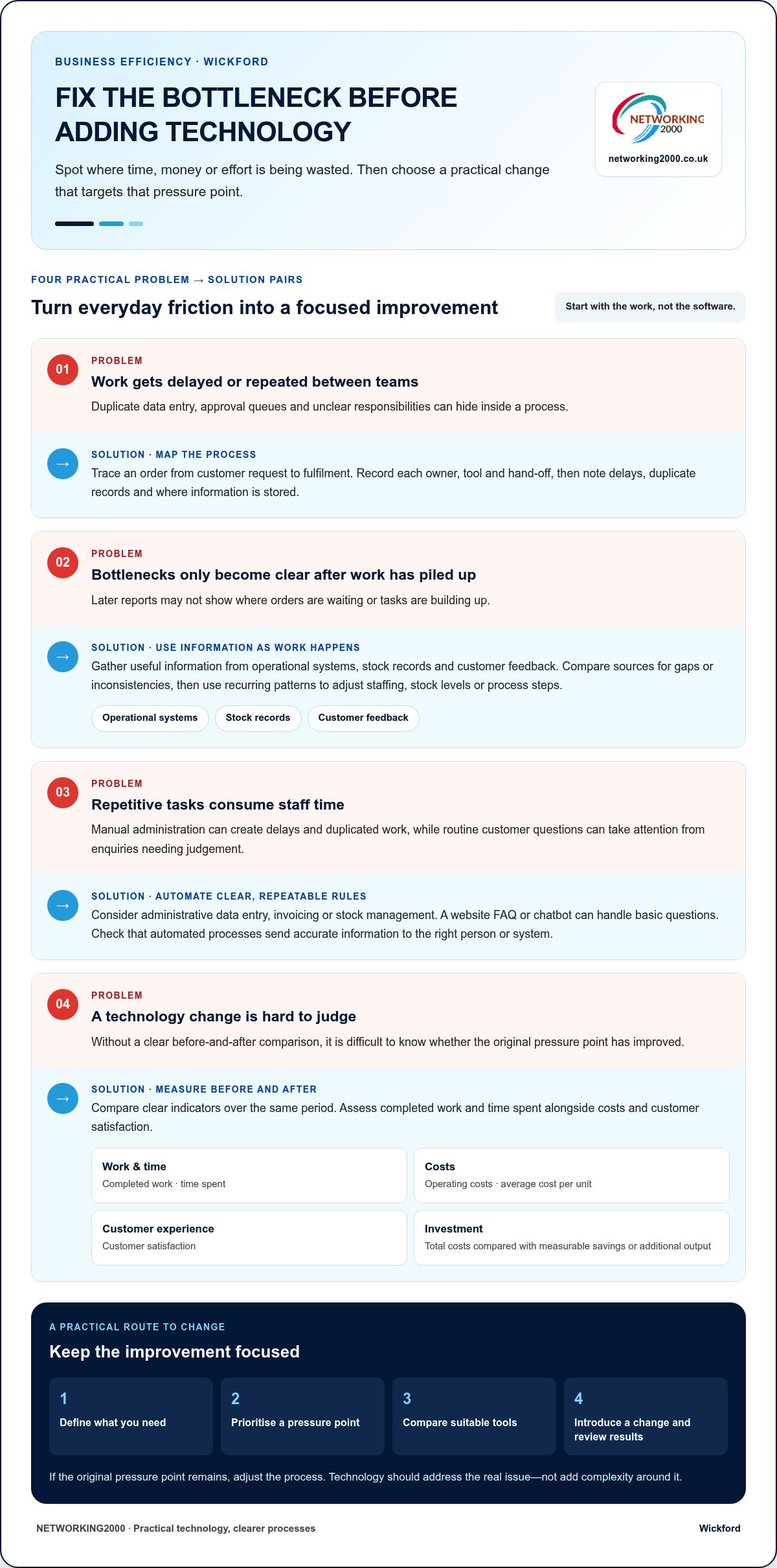
Start by identifying where time, money or effort is being wasted, then choose technology to address the specific problem. For example, mapping order fulfilment can reveal duplicate data entry or delays between teams. Improving business efficiency with technology in Wickford starts with finding these practical pressure points.
Assessing systems and pressure points
Map each process, including its owner, tools and hand-offs, to pinpoint pressure points. Repeated data entry, approval queues and unclear responsibilities can reveal inefficiencies before new software adds complexity. Trace an order from customer request to fulfilment, noting delays, duplicate records and where information is stored. To plan an upgrade, define what you need, prioritise a pressure point, compare suitable tools, then introduce a change and review the results.
Real-time data and operational optimisation
Real-time data collection captures information as work happens, rather than relying only on later reports. It can help managers spot emerging bottlenecks, such as orders waiting for stock or tasks building up at one stage. Gather useful information from operational systems, stock records and customer feedback, then compare sources for gaps or inconsistencies. Data analysis can reveal recurring patterns, helping teams adjust staffing, stock levels or process steps based on evidence rather than assumptions.
Automating everyday business tasks
Automation uses software to handle repetitive tasks with less manual effort. For Wickford businesses, improving business efficiency with technology might mean automating administrative data entry, invoicing or stock management to reduce delays and duplicate work. A website FAQ or chatbot can answer basic customer questions, leaving staff to handle enquiries that need judgement. Start with tasks that follow clear rules, then check that the automated process sends accurate information to the right person or system.
Measuring efficiency and technology returns
Measure efficiency by comparing clear performance indicators before and after a change. Track completed work and time spent alongside operating costs, average cost per unit and customer satisfaction. Financial efficiency shows how effectively a business turns revenue and resources into profit. To assess a technology investment, compare its total costs with measurable savings or additional output over the same period. Review the results against business objectives, and adjust the process if the original pressure point remains.
Cloud computing, mobile technology and networking
Cloud services, mobile tools and reliable networking can help Wickford businesses access information where work happens. Together, they support flexible access, shared working and computing capacity that can expand or contract with demand.
UK businesses should consider data protection, cybersecurity and accessibility when adopting technology. Choose tools that protect business and customer information, restrict access appropriately, and let employees use essential functions effectively on relevant devices.
For small businesses in Wickford, practical options include cloud file storage, mobile access to work systems, shared customer records and internet-based calls. A CRM system can keep customer details and follow-ups in one place, while a stable network lets employees access shared information. 5G networks can provide mobile broadband up to 100 times faster than 4G.
Cloud computing can help a business adapt by reducing reliance on physical infrastructure and making shared data accessible to authorised staff. Teams can work together on current files from different locations, while managers use cloud analytics to monitor activity and spot changes in demand. On-demand computing resources can also help businesses use capacity when needed instead of running underused hardware.
The scheme covers accounting, customer relationship management and e-commerce software; it is a discount programme, not a general technology grant.
Cloud and automation risks include inappropriate access, data loss and processes acting on incorrect information. Reduce these risks with suitable access controls, remote backups, firewalls and monitoring software, and review automated outputs. If you need help assessing your business systems and security, review your technology and security needs.
Communication, collaboration and workforce productivity
Communication platforms help employees share updates, decisions and files without relying on scattered messages. For a Wickford business, a shared project space can keep a customer request, its owner and the latest progress together. This visibility helps colleagues coordinate work and spend less time chasing information across separate conversations.
Remote working tools can connect office-based and mobile staff through shared documents, video meetings and team messaging. For example, a field employee can update a job record on a mobile device, while an office colleague sees the change and prepares the next task. Online collaboration platforms can also reduce travel between work locations and make shared files accessible to the people who need them.
Choose communication tools to suit the decisions and handovers your team handles each day. A sales team might use a shared customer record to pass a lead to customer service, while project staff use a channel for deadlines and updates. Keep conversations in the relevant place, assign an owner to each action, and record decisions where the wider team can find them.
Task and workflow management tools show who is responsible, what remains to be done and where work is waiting. Team members can assign tasks, add due dates and update statuses, giving colleagues a current view without repeated email requests. This can help reduce missed deadlines and duplicated work, especially when several people contribute to one project.
Productivity depends on communication that suits the task, not on adding more platforms. Four out of five people would rather speak with a person by phone than use chatbots, email or voice recordings for help. Keep a clear route to a person for complex enquiries, and use digital channels for routine updates, shared documents and straightforward requests. Review which tools employees actually use, then remove overlapping channels that fragment the workflow.
Cost savings and business resilience through resource efficiency
Resource efficiency means reducing avoidable waste while keeping essential work moving. For a Wickford business, that includes stock, energy, staff time and equipment. The goal is not simply to spend less. It is to protect service quality, control operating costs and make resources available for priorities that support profit.
Inventory forecasting can help a business match stock to expected demand and avoid tying up capital in excess items. Track inventory turnover and average stock levels to see what sells quickly and what remains unused. For example, a retailer can review slow-moving lines before placing its next order, then adjust quantities based on sales patterns.
Tracking utilities provides another practical view of resource use. Compare energy bills over time and against operational activity to spot unusual consumption. Energy-efficient equipment and regular maintenance can help control energy costs, maintain performance and reduce downtime. Maintenance records can also reveal recurring equipment problems, so work can be planned before disruption affects output.
Efficiency can strengthen resilience by reducing reliance on fragile processes and unnecessary resource use. The World Economic Forum reports that sustainable resource management can reduce costs and improve long-term profitability and resilience. For example, documenting key workflows and keeping operational information accessible can help teams maintain essential tasks when normal working arrangements are disrupted.
Start with one measurable pressure point, such as excess stock, rising utility use or repeated equipment downtime. Record the current position, make a targeted change, then compare the same measure afterwards. This links technology decisions to operational results rather than assumptions. If you’re reviewing how business IT can support resilience, discuss your technology requirements as part of the planning process.
AI-powered predictive maintenance can identify potential equipment failures before they occur, helping businesses reduce resource use and extend equipment life.
Networking2000: Managed IT Support
Networking2000 provides Managed IT Support for businesses that want their technology to support day-to-day work more effectively. Turn to this support when systems are slowing staff down, business needs have changed, or you’re planning improvements and need help aligning IT with operations.
Managed Firewalls can support network security, while VoIP Telephony can help keep business calls connected through internet-based services. The right focus depends on the pressure points you’ve identified, whether that’s protecting access, improving communication or making existing systems easier to manage. Networking2000 can help you consider practical IT support in the context of your business needs. Contact Networking2000 to discuss your requirements.
Make your next technology decision count
Choose a next step that suits your business, rather than simply adopting the newest tool. Start by identifying one business priority for the coming months, such as helping staff serve customers more easily or preparing systems for growth. Then assess whether your current technology supports that priority and what needs to change.
Improving business efficiency with technology in Wickford is an ongoing process, not a single upgrade. As your business changes, review whether your tools still support your people, customers and working practices. Base decisions on practical needs, and include security and continuity from the outset.
Networking2000 can discuss how its business IT services fit your requirements. Contact Networking2000 to discuss your needs and explore a sensible next step for your business.
With a clear priority and a considered approach, you can move forward with confidence.
Frequently Asked Questions
How can technology improve productivity?
Technology can improve productivity by helping people complete routine work with fewer manual steps and interruptions. For example, a system that routes an incoming request to the right team can reduce time spent forwarding emails. Choose tools that fit existing responsibilities, then show employees how to use them. This helps staff focus on customer needs and decisions that require their experience.
What are the most effective strategies for enhancing business process efficiency?
Effective strategies combine clear procedures, suitable tools and staff involvement. Set a consistent method for recurring work, such as approving supplier requests, and remove steps that add no useful control. Involve employees who use the process every day, as they can identify practical obstacles. Introduce changes in manageable steps, provide guidance, then review how well the new approach works.
Why is it important for businesses to optimise efficiency?
Optimising efficiency helps a business use its time and skills where they matter most. Reducing avoidable tasks can give employees more capacity to support customers, handle complex work or adapt as priorities change. It also helps managers make informed decisions about where to direct resources. For a Wickford business, smoother operations can support dependable service as customer needs and workloads shift.
Which IT support and digital transformation providers serve businesses in Wickford?
Networking2000 serves businesses in Wickford with Managed IT Support and business infrastructure services. Its relevant offerings also include Managed Firewalls, VoIP Telephony and IT Security. Businesses seeking help with a technology change can discuss their operational requirements and identify which IT support may fit. Networking2000 also provides Website Design & Development for businesses reviewing their online presence alongside wider technology needs.

