The best next IT investment may be the one you do not buy yet. Strategic IT planning for Wickford companies starts with business goals, not a list of new technology. That makes it easier to see what is working, where risks need attention and which spending can wait.
If IT decisions feel reactive or disconnected from your plans, unclear priorities may be the reason. Security, infrastructure and communications all matter, but it can be difficult to decide what to fund first. A practical plan brings these needs together and gives each decision a clear business purpose.
This guide explains how to assess your current IT, identify priorities and shape a realistic plan for investment and risk reduction. You’ll compare planning approaches, consider how security and communications fit alongside infrastructure, and weigh internal planning against support from a local IT provider. The aim is to give your Wickford business a clearer basis for deciding what to do next, and why.
Key Takeaways
- Strategic IT planning for Wickford companies starts with business goals, helping you focus on priorities rather than build a technology shopping list.
- Use a clear planning process to turn objectives and an assessment of your current systems into a phased roadmap.
- Compare internal planning, one-off consultancy and ongoing managed IT support by looking at continuity, scope and review arrangements.
- Make priorities actionable by assigning an owner, identifying dependencies and agreeing how progress will be measured.
- Choose a planning partner whose recommendations suit your business size, objectives and existing IT environment.
Why strategic IT planning matters for Wickford companies
Strategic IT planning is a business-led way to decide which technology needs attention, why it matters and how progress will be reviewed. It connects business objectives with practical choices about systems, security and communications. The discipline of Information Technology Planning (ITP) provides a useful foundation, but your plan should reflect your organisation’s needs rather than follow a standard technology checklist.
Without a joined-up view, decisions can become reactive. A business might add software to solve one problem, then discover it does not work well with existing systems. Security or maintenance responsibilities may be unclear, while separate teams or suppliers compete for limited investment. These issues can disrupt operations, create extra work for staff and make it harder to judge which improvements will support growth.
Planning brings connected needs into the same discussion. For example, improving customer communication may involve reviewing telephony, the systems staff use to access customer information and the security controls around that data. If infrastructure also needs attention, consider dependencies and operational constraints before setting the order of work. The aim is to prioritise decisions, not replace every system at once.
What should an IT strategy achieve for a Wickford business?
Start with a clear business objective: support growth, make day-to-day operations more reliable or improve how customers reach your team. Then assess which technology choices could help achieve it. A popular tool or emerging trend is not automatically the right investment. Strategic IT planning for Wickford companies should reflect each firm’s size, existing systems, risks, budget priorities and available internal expertise.
A useful strategy can help leaders make considered decisions across areas such as:
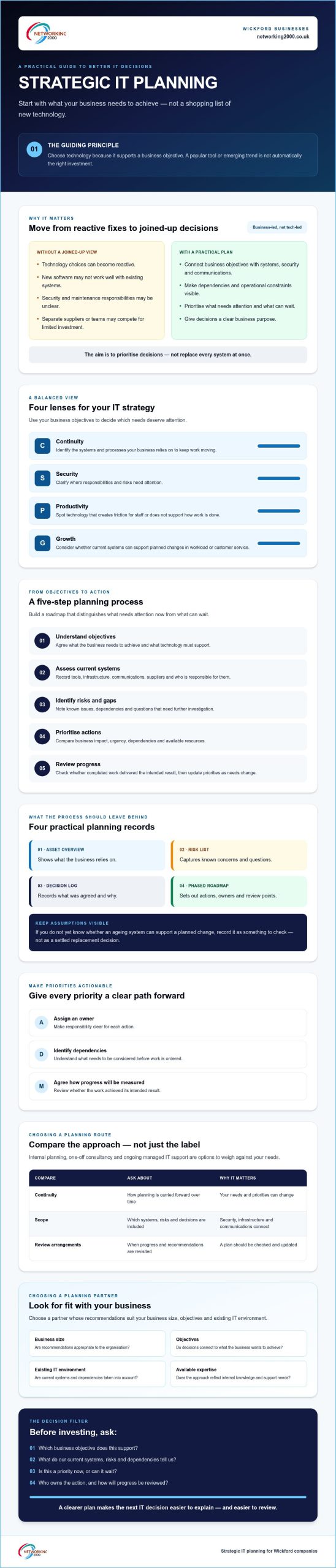
- Continuity: identify the systems and processes your business relies on to keep work moving.
- Security: clarify where responsibilities and risks need attention.
- Productivity: identify technology that creates friction for staff or does not support how work is done.
- Growth: consider whether current systems can support planned changes in workload or customer service.
Which signs suggest your current IT approach needs review?
A review may be useful if recurring faults disrupt work, infrastructure is ageing or systems no longer fit your business processes. Other signs include uncertainty about who owns security decisions, which investments are coming up or what staff will need as the organisation changes. These issues call for clearer priorities, not automatically an external consultancy. Some firms can plan internally; others may benefit from an outside perspective or ongoing support.
How a strategic IT planning process turns goals into a roadmap
A useful plan turns business objectives into decisions that can be owned, scheduled and reviewed. For a Wickford company, a straightforward process helps separate what needs attention now from improvements that can wait.
- Understand objectives. Agree what the business needs to achieve and what technology must support.
- Assess current systems. Record the tools, infrastructure, communications and suppliers in use, along with who is responsible for them.
- Identify risks and gaps. Note known issues, dependencies and unanswered questions that need further investigation.
- Prioritise actions. Compare business impact, urgency, dependencies and available resources.
- Review progress. Check whether completed work has delivered the intended result, then update priorities as business needs change.
The process should leave you with practical records, not just a discussion. An asset overview shows what the business relies on. A risk list captures known concerns, while a decision log records what was agreed and why. A phased roadmap then sets out actions, owners and review points. Keep assumptions visible. If you do not yet know whether an ageing system can support a planned change, record that as something to check rather than treating replacement as a settled decision.
What should an initial IT assessment cover?
Review core systems and infrastructure alongside business communications, suppliers and ownership. Map how key tools depend on one another, and consider where disruption could interrupt daily work. Record security and compliance questions for appropriate specialist review rather than assuming the assessment alone provides a definitive answer.
This wider view helps distinguish essential maintenance and security work from improvements intended to support future growth. For instance, resolving a known weakness may take priority over adding a new capability, while an upgrade could depend on another system being updated first. A data-driven IT strategic planning approach can help teams use evidence to examine needs and set direction.
How do priorities become a usable IT roadmap?
Rank proposed actions by their effect on the business, urgency, dependencies and available resources. Group them into manageable phases. Each action should have a named owner, a decision or dependency to resolve, and a review point for checking progress. Agree timing and investment after the assessment, when the business understands the work involved and its operational constraints.
Where internal expertise or capacity is limited, a local provider may be able to discuss connected needs such as managed IT support, firewalls and communications. Wickford firms considering this route can explore managed IT support and security services as one possible part of their planning conversation.
How to compare strategic IT planning options in Wickford
There is no single planning model that suits every business. The right fit depends on your internal skills, available time, system complexity and need for ongoing review. Use this comparison to identify an approach that matches your requirements, then confirm exactly what the work includes. IBM’s guide to IT strategic planning also explains how technology choices can connect with business objectives.
| Planning approach | Business involvement | Continuity and scope | Accountability and reviews |
|---|---|---|---|
| Internal planning | High. Your team sets priorities and makes decisions. | Draws on internal knowledge; scope depends on available skills and time. | Internal owners lead actions and decide when to review the plan. |
| One-off consultancy | Your team shares objectives, information and decisions during the engagement. | Provides a defined assessment or planning project. Confirm what happens after delivery. | Agree who owns implementation and whether any follow-up review is included. |
| Ongoing managed IT relationship | Your business retains ownership of objectives and approvals, with continuing input from a provider. | Can connect planning with ongoing IT support. Confirm the agreed scope and exclusions. | Clarify responsibilities, reporting and how often priorities are reviewed. |
When is internal IT planning enough, and when might outside advice help?
Internal planning may be practical if someone has the right expertise, can make time for the work and understands the systems and risks involved. Outside advice can add capacity or a fresh assessment when systems are complex, internal knowledge is limited or priorities are difficult to reconcile. For organisations looking to align technical infrastructure with broader business strategy, specialist firms like EBSA Consulting can provide dedicated enterprise architecture guidance. An adviser can inform decisions, but business leaders still need to own objectives, approve priorities and decide what fits.
What questions should Wickford companies ask a planning provider?
Ask how discovery works and what written outputs you will receive. Check who approves priorities, who manages implementation and how progress will be reviewed. Find out how recommendations will account for existing systems, suppliers and internal responsibilities. For strategic IT planning for Wickford companies, ask how security, infrastructure and communications choices connect to business goals rather than being assessed as separate service areas.
Before agreeing to work, request written deliverables, assumptions, responsibilities and exclusions. Clarify whether the provider is advising, implementing agreed changes or supporting IT on an ongoing basis. This helps you compare proposals by what they actually include, not just their headline descriptions.
How to turn your IT plan into practical action
A roadmap only helps if people know what happens next. Turn each priority into a short action record: name an owner, note any dependency, identify the decision needed and choose a measure of progress. This gives managers a clear way to move work forward and makes it easier to explain why one task comes before another.
Sequence work around business operations. A security change might depend on updating infrastructure first, while a telephony change could need staff input and a suitable implementation window. Consider how each task affects daily work, which systems rely on it and whether the right people and resources are available. This helps avoid treating security, infrastructure and communications as unrelated projects.
How should a business prioritise IT work?
Separate urgent risk reduction from planned upgrades and longer-term improvements. Then assess each item against business impact, urgency, dependencies, potential staff disruption and available resources. Record the reason for its priority, along with any assumptions that still need checking.
For example, a known security concern may need attention before a feature upgrade, while a planned infrastructure change may need to come first if other work depends on it. The order should reflect your business context, not a generic checklist. Review the sequence if objectives, risks or systems change.
How can businesses check whether the plan is working?
Choose measures that relate directly to your objectives. If the goal is to address recurring IT issues, track whether those issues continue. If the aim is to move agreed work forward, record completed actions against the plan. Measures should show progress without implying savings, fewer incidents or productivity gains that have not been demonstrated.
Assign someone to lead reviews and choose a cadence the organisation can sustain. At each review, check progress, outstanding decisions, new dependencies and changes in business needs. Update the roadmap where necessary, and note why priorities have shifted. This makes the plan a working management tool rather than a document that quickly falls out of date.
If you need help putting agreed priorities into practice, explore managed IT support services for Essex businesses and discuss how support could fit your objectives, existing systems and responsibilities.
Choosing a strategic IT planning partner for your Wickford company
A good partner should help you make clear decisions, not steer you towards a standard package. Look for a provider that takes time to understand your objectives, explains recommendations plainly and sets out what is and is not included. Check that the proposed work fits your business size, existing systems and available expertise.
What makes a local IT planning relationship a good fit?
Look for a discovery process that covers how your business works, the systems it relies on and the risks or constraints you have identified. Recommendations should be tailored, with assumptions and limitations made clear. Ask how the provider considers IT support, firewalls and business communications together, and how those areas relate to your objectives. Confirm Wickford coverage and any service commitments directly before proceeding.
Networking2000 provides IT services in Essex and London, including managed IT support, managed firewalls, VoIP telephony and IT security. Its services may be relevant to a Wickford business reviewing connected technology needs, but the right fit depends on your requirements and the scope agreed. Ask how a planning discussion could address your objectives and whether any of these services are suitable, rather than assuming every service is required.
What should happen before you agree to proceed?
Prepare a short brief so the first conversation stays focused. Include your business objectives, known IT concerns, current systems and suppliers, and any constraints that could affect change. You do not need a perfect inventory. Note what you know and flag gaps as questions to investigate.
Before agreeing to work, ask for the proposed process and written details of:
- Deliverables: what assessment, recommendations or roadmap you will receive.
- Responsibilities: who provides information, approves priorities and leads any agreed implementation.
- Scope and assumptions: what is included, what is excluded and what still needs checking.
- Review arrangements: how progress and changing priorities will be considered.
Use those answers to compare options, not just service descriptions. A useful conversation should leave you clearer about the decisions your business needs to make, even if you decide to plan internally or speak with another provider. Once you have defined your questions, contact Networking2000 to discuss your business goals and whether its services are a suitable match for your Wickford business.
Make your next IT decision with confidence
Good planning connects technology choices to business priorities. Start with your objectives, assess your current systems and risks, then turn the findings into owned, reviewable actions. For strategic IT planning for Wickford companies, the aim is not to replace everything at once. It is to make clear decisions about what matters now and what can wait.
Choose an approach that fits your team’s expertise and capacity. If you are considering outside support, check that the provider understands your existing environment, explains its recommendations clearly and sets out responsibilities and review arrangements.
Networking2000 provides managed IT support, managed firewalls, VoIP telephony and IT security for businesses. These services can help bring connected technology needs into the conversation. To discuss your business goals and IT priorities, speak with Networking2000 about your Wickford business.
A clear first step can make the decisions ahead feel more manageable. Start with your business needs, then build a plan around them.
Frequently Asked Questions
What is strategic IT planning for a small business?
Strategic IT planning for Wickford companies is a business-led process for deciding how technology should support objectives, manage risks and meet future needs. It involves reviewing current systems, setting priorities and checking progress. Routine IT support is different: it deals with day-to-day technical needs and keeping systems working. Planning takes a broader view, helping a business decide what to improve, why it matters and who should lead each action.
How often should a business review its IT strategy?
Review your IT strategy regularly, with timing suited to your business and the pace of change. A planned review helps you check progress, revisit priorities and confirm that actions still support your objectives. Do not wait for a scheduled review if something important changes. Business growth, a new system, a security concern, supplier changes or recurring disruption can all prompt an earlier assessment and an update to the plan.
Do small companies in Wickford need an IT strategy?
Not every small company needs a formal document or outside adviser, but clear technology priorities can be useful. The right level of planning depends on business goals, risks, the complexity of current systems and the expertise available internally. A small firm with straightforward needs might maintain a simple action list. A business relying on several connected systems may need a broader review to understand dependencies and plan changes carefully.
What should be included in an IT strategic plan?
An IT strategic plan should connect business objectives to the technology decisions needed to support them. Include an overview of current systems, known risks and open questions, then list prioritised actions with an owner and any dependencies. Record why key decisions were made and how progress will be reviewed. The plan should also identify what needs further investigation, rather than presenting assumptions as confirmed requirements or committing to changes before they have been assessed.
Should a small business use an IT consultant or managed IT provider?
Choose based on the help you need. A consultant may suit a defined assessment or planning project, particularly if you want an independent view or extra expertise for a specific decision. A managed IT provider may be more suitable when you also want an ongoing support relationship. Compare scope, deliverables, responsibilities and review arrangements. Your business should retain ownership of its objectives and approval of priorities, whichever route you choose.
How can a business prioritise IT investment?
Rank proposed work by its likely business impact, urgency, dependencies and the resources available. Separate risk reduction or essential maintenance from planned upgrades and longer-term improvements. Check whether one task must happen before another, and consider how changes could affect staff or daily operations. Write down why each priority was chosen. This makes decisions easier to review if business objectives, risks or available capacity change.
Can an IT plan include cybersecurity and business communications?
Yes. An IT plan can consider cybersecurity and business communications alongside infrastructure, so dependencies and priorities are easier to see. For example, a change to business telephony may rely on existing systems, while security decisions may affect how staff access them. Review each area in the context of business objectives and operational needs. For specialist questions, record what needs checking and seek appropriate expertise before treating a risk or solution as confirmed.

